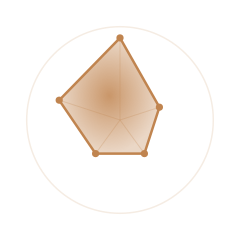
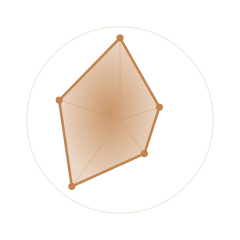
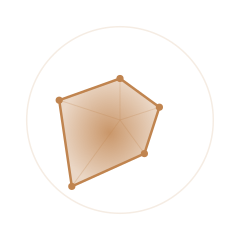
There is a strange moment, somewhere in your thirties or forties, when you catch yourself reacting differently to something that would once have undone you — and you realise, almost with a start, that you are not quite the person you used to be. The things that used to rattle you have lost their grip. Certain edges have worn smooth; certain quiet strengths have grown loud. Nobody warns you that you keep becoming yourself long after you assumed you were finished. Ageing is not just something that happens to your face and your knees. It happens to your character, and it has a direction.
But that direction is not the same for everyone. Someone who spent their youth all sharp opinions and restless drive often softens with the decades — learning patience, learning that not every hill is worth dying on, letting tenderness catch up with their force. Someone else, who spent their early years anxious to please and quick to apologise for taking up space, tends to travel the opposite way: the years harden a spine they never knew they had, and they finally stop asking permission to exist. Same passage of time, two almost opposite arrivals — one growing gentler, one growing braver.
That is why each of the sixteen archetypes has its own guide below — written individually, not pressed from a template — tracing what softens and what sharpens in that particular type, the wisdom its decades tend to bring, and how it grows into its fullest self.
Read in whichever direction helps. Your own guide can show you the person you are quietly becoming; someone else’s can help you see how far they have travelled.
If you do not yet know your archetype, the free test takes about five minutes. Then find your type below — and meet your future self.
Common questions about How They Change With Age
Does your personality really change as you get older?
Yes, though more gradually than people expect. Decades of research tracking the same individuals find that traits drift steadily: most of us grow a little more conscientious, more emotionally settled, and more agreeable as we age, while raw novelty-seeking tends to cool. The shifts are real but slow, which is why you rarely notice them happening. Different starting temperaments simply travel different distances along the way.
At what age does your character stop changing?
It largely never does. The fastest changes tend to happen in your twenties, when work, relationships and responsibility reshape you quickly, and the pace gentles after thirty. But studies following people into their seventies and eighties show meaningful movement well into later life. Major events — loss, illness, becoming a carer — can still bend the curve. You are a work in progress for far longer than most assume.
Why do older people seem calmer and less anxious?
Much of it comes down to perspective. Having weathered setbacks before, the brain learns that most crises pass and that fewer things genuinely threaten you. Many people also grow better at choosing which battles deserve their attention and which simply do not. Add a quieter biological response to stress over time, and the result is a steadier temperament. How calm someone becomes still depends on where they began.
Is it normal to feel like a completely different person than you were at twenty?
Entirely normal, and usually a good sign. The twenty-year-old you remember was still assembling their values, tastes and boundaries largely from borrowed material. Feeling estranged from them simply means the assembling worked. What tends to stay constant is the underlying grain of who you are — your curiosity, your warmth, your way of meeting the world — even as the surface looks unrecognisable.
What is the difference between maturing and just getting set in your ways?
Maturing means your reactions become wiser: you respond to situations rather than merely repeat old habits. Becoming set in your ways means the opposite — your responses narrow into reflexes you stop questioning. The dividing line is curiosity. People who keep asking why they feel and act as they do tend to keep growing; those who decide they have already finished learning tend to calcify, whatever their age.