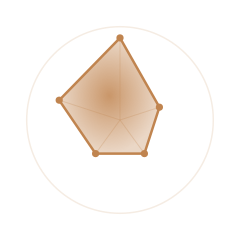
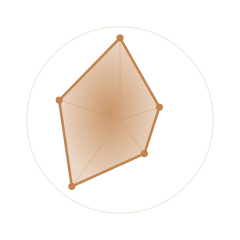
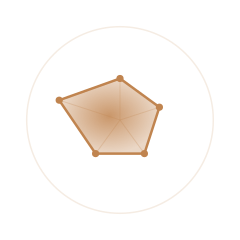
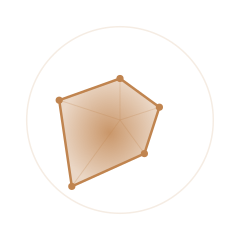
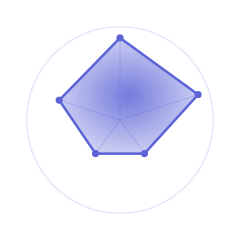
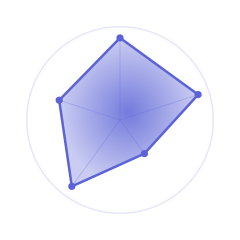
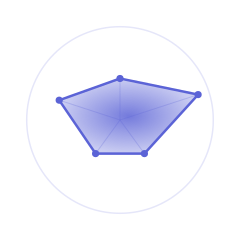
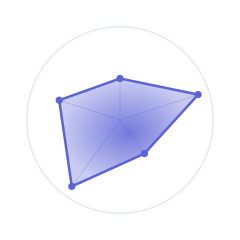
There is a particular itch that comes when something almost makes sense but not quite — a stranger’s odd remark, a closed door, a thing that works and you cannot say why. Some people feel it constantly and chase it down a dozen rabbit holes a day; others feel it rarely, but when it does grip, it holds on for years. Either way, curiosity is not a single dial you have turned up or down. It has a direction, a flavour, a set of things it reliably reaches for — and that shape is far more personal than the lazy split between “curious” and “incurious” ever allows.
What pulls your attention tracks closely with personality. One mind is drawn outward, to people — what someone really meant, what makes a friend tick, the story behind a quiet face — and finds bare facts a little cold by comparison. Another barely notices the social puzzle and instead burns to know how a thing works: take it apart, trace the mechanism, follow the idea to its root, and never mind whose feelings are in the room. The same hunger to understand, entirely different prey. And the question that lights one mind up would strike the other as oddly beside the point.
These guides take that difference seriously. There is one for each of the sixteen archetypes below — written by hand, not stamped from a formula — covering what pulls that type’s attention, how it explores the world and ideas, and where its curiosity leads it or quietly stalls.
Read about yourself, or about someone whose questions have always puzzled or delighted you.
If you do not yet know your archetype, the free test takes about five minutes — then find your type below.
Common questions about How Curious They Are
Why are some people more curious than others?
A good deal of it comes down to how strongly your brain rewards novelty. For some, an unanswered question feels like an open loop that nags until it’s closed; for others, the same gap raises no alarm at all. Upbringing, the freedom you had to ask and explore, and whether questions were welcomed or shut down all leave their mark. Personality plays a part too, shaping which sorts of puzzles tug at you.
Is it normal to lose your curiosity as you get older?
It’s common, though far from inevitable. Adult life tends to fill up with routine and known quantities, so fewer genuine surprises land in your path, and tiredness quietly trims the appetite to wonder. The pull is rarely gone for good, however. Putting yourself somewhere unfamiliar, asking one daft question a day, or learning something with no use to it usually wakes it straight back up.
How can I become a more curious person?
Start by noticing what you brush past. When a small “huh, that’s odd” flickers, pause on it for thirty seconds rather than scrolling on. Ask people one real follow-up question instead of nodding politely. Read slightly outside your usual lane, and let yourself not know things without rushing to look busy. Curiosity grows like a muscle: the more attention you give small mysteries, the more readily they appear.
What does it mean if you have no curiosity about anything?
A flat, total lack of interest is worth taking seriously, since it can shadow low mood, burnout, or simple exhaustion rather than being a fixed trait. Many people who feel “incurious” are really just curious about narrower things than the world expects them to be. If the dullness is new, heavy, and paired with low energy, it’s worth a gentle chat with your doctor.
What is the difference between being curious and being nosy?
The line sits in what you’re after and how you handle what you find. Curiosity seeks to understand and tends to respect the other person’s pace and privacy; nosiness chases information for its own sake, or to feel in the know, often pressing past someone’s comfort. One leaves people feeling seen; the other leaves them feeling exposed. Where you naturally land owes a lot to your wider character.