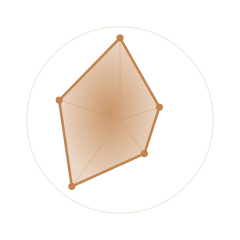
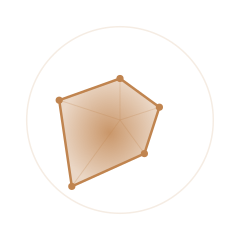
There is a drawer somewhere — real or in your head — that you cannot quite bring yourself to empty. An old ticket stub, a faded message, a photograph of a kitchen that no longer exists. You tell yourself you will sort it out one day, and you never do, because the point was never the object. The point is the door it opens: a particular afternoon, a person you were once, a feeling you can still summon if you hold the thing in your hand and stay very still. We all carry the past around with us. What differs, enormously, is how heavy we let it become.
That weight tracks personality more closely than people expect. Some are gentle archivists of their own lives — forever returning to old rooms, replaying first meetings, finding that the past gets warmer and more golden the further it recedes. They risk living half-turned-around, loving the memory of a thing more than the thing itself. Others travel light by instinct. They close chapters cleanly, rarely look over their shoulder, and would sooner build the next room than dust the old one — which keeps them free, but can mean they let go of things, and people, before they have truly finished feeling them. One holds on too tightly; the other releases too soon. Both are trying, in opposite ways, to keep the past from hurting.
Each of the sixteen archetypes has its own guide below — how much it looks back, what it clings to or quietly lets slip, and how memory shapes the way it lives now.
Read about yourself to understand why certain doors stay open in you, or about someone you love to see what they are still carrying. If you do not yet know your archetype, the free test takes about five minutes.
Common questions about Their Relationship with the Past
Why do I keep thinking about the past so much?
Often it is the mind trying to finish something it never properly closed — a goodbye that came too fast, a choice you still question, a version of yourself you miss. Looking back can be a quiet form of sense-making rather than weakness. It tips into trouble only when the rear-view mirror gets bigger than the windscreen. Some people are simply wired to revisit more than others.
Is it normal to feel nostalgic about things that weren’t even that happy?
Yes, surprisingly so. Memory tends to soften hard edges and keep the warmth, so even a difficult chapter can ache pleasantly from a distance. Part of what you miss is usually not the situation itself but the younger you who lived through it, and the open possibilities you had then. It is a very human trick of perspective, not a sign anything is wrong with you.
How do I stop living in the past and move on?
Start by letting yourself feel the thing fully rather than scolding yourself for feeling it — what we rush past tends to follow us. Then gently rebuild attention towards the present: small plans, new routines, people who belong to now. Closure is rarely a single dramatic moment; it is mostly repetition, choosing today a little more often than yesterday until the balance shifts on its own.
What’s the difference between healthy reminiscing and being stuck?
Healthy reminiscing leaves you steadier — you visit a memory, take something from it, and return to your life refreshed or a touch wiser. Being stuck does the opposite: the past starts crowding out the present, comparisons make today feel thin, and you find yourself replaying rather than living. A useful test is direction. Does looking back send you forward, or keep you circling?
Why do some people let go of the past so easily while others can’t?
Much of it comes down to temperament and how each mind protects itself. Some travel light because moving forward feels safer than dwelling, and closing a chapter brings relief. Others hold on because remembering is how they stay loyal to what mattered. Neither is stronger or weaker; they are different defences against the same ache. The 16 archetypes describe these instincts in far more detail.