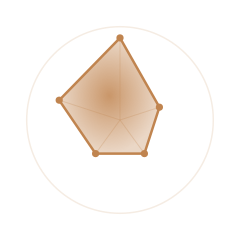
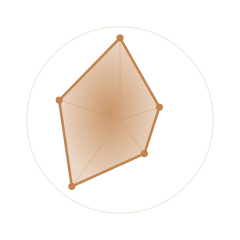
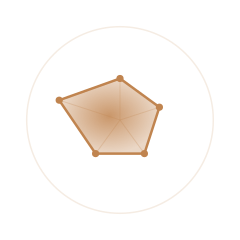
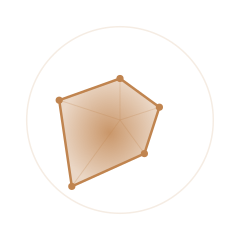
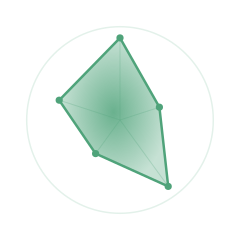
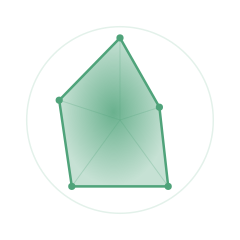
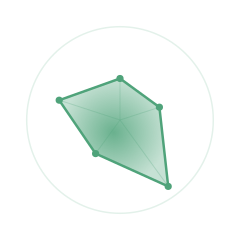
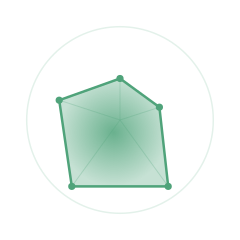
Who Each Personality Archetype Looks Up To — Their Quiet Role Models
There is usually one person you can’t quite stop thinking about — not with envy, exactly, but with a pull. The way they hold a room, or stay calm when everything is on fire, or say the true thing without flinching. You catch yourself watching how they do it, half-hoping it might rub off. We rarely admit this out loud, because admiration feels like confessing what we’re missing. But the people you look up to are one of the most honest maps of who you secretly want to become. Tell me whom you admire, and I can usually guess the shape of the person you are quietly trying to grow into.
What we reach for differs sharply from one person to the next. One kind of person is drawn to the bold and the certain — the ones who decide fast, take the risk, and carry a room by sheer conviction; they admire nerve, and ache to be braver. Another is moved by the steady and the kind — the ones who listen without judging, who stay when it gets hard, who make others feel safe; they admire warmth, and quietly long to be more patient. Hand both the same hero and they’ll notice opposite things: one studies the courage, the other studies the grace.
That is why each of the sixteen archetypes has its own guide below — written individually, not stamped from a formula — naming the qualities it admires most, the kind of person it quietly hopes to become, and how its role models shape it over a lifetime.
Read about yourself to understand what your admirations are really telling you, or about someone you love to see who they’re trying to grow into. If you do not yet know your archetype, the free test takes about five minutes.
Common questions about Who They Look Up To
Why do I look up to certain people and not others?
You tend to admire people who carry a quality you feel short of yourself. If someone’s calm under pressure stops you in your tracks, it is often because calm is what you most wish you had. Admiration works like a mirror held at an angle: it shows you the version of yourself you are reaching towards. Different personalities reach for different qualities, so two people rarely look up to the same person for the same reason.
Is it normal to have no role models?
Yes, and it is more common than people let on. Some go through long stretches admiring no one in particular, often because nobody around them reflects what they currently value, or because they have learned to trust their own judgement. It is not a flaw. That said, having someone to look towards can give your growth a clearer shape, so it is worth staying open to the people who quietly impress you.
How do I find a good role model?
Start by noticing who you instinctively pay attention to, then ask what specific quality draws you in rather than admiring the whole person wholesale. The best role models are close enough to study honestly, not polished figures you only see from a distance. Watch how they handle ordinary, awkward moments, since that reveals far more than their highlights ever will.
What does it mean if I want to be like someone?
It usually means they embody something you are still developing in yourself, and your admiration is pointing the way. The healthy version is borrowing their approach while staying yourself; the trickier version is trying to vanish into them. A useful test is whether thinking of them leaves you motivated or quietly diminished. The first means they are helping you grow; the second is worth gently questioning.
Why do I feel jealous of people I admire?
Admiration and envy often arrive together, because both fix on a quality you badly want. The difference is that admiration says “I’d love to grow into that,” while envy whispers “and it’s unfair that they have it.” Feeling both does not make you a bad person; it simply shows the quality matters to you. Try treating the sting as information about what you genuinely care to become.
Builders
Practical, dependable minds who turn ideas into something real and lasting.
Any inquiryTests, your result, your report or a payment. A real person replies, usually within two working days.
How can we help? Pick a quick answer, or write to us below.
Quick answers
Our own test: 30 quick questions, about three minutes, free and with no sign-up. At the end you get your archetype — one of 16 — and a profile of how you think, love, work and grow.Take the free test →
Every type has its own in-depth profile: strengths, blind spots, careers, relationships and compatibility with the other 15. Read them free, before or after you take the test.Browse all 16 types →
Seventeen free tests in all — Big Five, Enneagram, DISC, career, attachment style, emotional intelligence, conflict style, love style, leadership, introvert-or-extrovert and more. Instant results, no account needed.Start with Big Five →
The Full Report is eleven long chapters written for your own archetype — untapped strengths, honest blind spots, love, friendship, home, work and money, and a 30-day growth plan — plus the whole thing as a PDF to keep. It is offered on your result page once you have taken the test.
Results are saved in the browser you took the test in. On a new phone, or after clearing history, use the restore prompt at the bottom of any page and enter the email you saved or paid with.
Thank you, we have your message.
Your reference:
We reply to your email, usually within two working days.
Need to add an order ID or more detail? Use the full page.