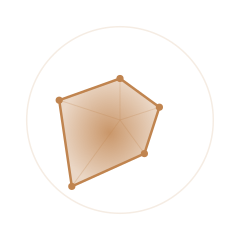
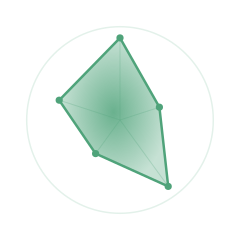
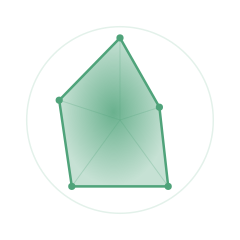
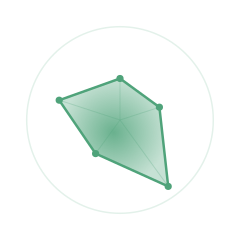
How Each Personality Archetype Builds and Gives Trust
Think about the last time you decided someone was safe. Maybe it was instant — a warmth in them that made you open up before you could think twice. Or maybe it took months: a slow accumulation of small kept promises, until one day you noticed you had stopped bracing yourself around them. Either way, the moment rarely arrives the way we are told it should. We grow up believing trust is a single switch that flips for everyone at the same speed, and then we feel faulty when ours moves faster, or slower, than the people we love.
The truth is that trust runs on a clock, and the clock is set by personality. How quickly you extend it, what someone has to do to earn it, what shatters it in an instant, and how far you let people in once they are inside — all of it follows your type. One kind of person hands over trust early and generously, treating openness as a gift offered first and revoked only if betrayed. Another keeps it locked behind a quiet test, watching for consistency before risking a single soft word. Neither is naive and neither is cold; they are simply running different rules, and when those rules meet they can read each other entirely wrong.
Each of the sixteen archetypes has its own guide below — how readily they trust, what reliably earns it, what breaks it for good, and how they finally let someone in.
Read about yourself to understand the terms you quietly set, or about someone you love to see why they open at the pace they do. If you do not yet know your archetype, the free test takes about five minutes.
Common questions about How They Build Trust
Why is it so hard for me to trust people?
Difficulty here usually traces back to experience rather than a flaw in you. If past relationships taught you that openness gets punished, your mind learns to keep its guard up as a sensible form of protection. Rebuilding that capacity tends to come from small, low-stakes risks that prove safe over time. Some people are also simply wired to verify before they relax, and that caution can be a strength.
Is it normal to take a long time to trust someone?
Completely. People vary enormously in how long they need before they feel safe, and a slower pace is neither cold nor a sign that something is wrong. For many, certainty arrives only after they have watched someone stay consistent across different moods and pressures. The healthier question is not how fast you move, but whether your guard ever comes down at all once the evidence is there.
How do you rebuild trust after it’s been broken?
Repair leans far more on changed behaviour than on apologies, however sincere those words feel in the moment. The person who caused the hurt has to accept that they no longer set the timeline; the wounded party does. Steady, visible reliability over weeks and months is what slowly refills the well. Pressing someone to “just move on” almost always sets the process back rather than speeding it up.
What’s the difference between trust and blind faith?
Trust is earned through evidence: you have seen someone handle honesty, pressure or temptation well, so you reasonably expect them to again. Blind faith skips that step entirely and hopes for the best. The distinction matters because healthy trust still keeps its eyes open and adjusts when reality changes, whereas blind faith ignores warning signs. People who test before opening up are simply gathering that evidence first.
What does it mean if someone trusts you quickly?
Fast trust often reflects how that person is built rather than anything unusual about you. Some treat openness as a gift offered freely, choosing to assume goodwill until proven otherwise. It can feel flattering, and it usually is genuine, but it is wise to honour it carefully. The opposite tendency, hanging back until certainty arrives, is equally valid; the two styles just read each other very differently.
Builders
Practical, dependable minds who turn ideas into something real and lasting.
Any inquiryTests, your result, your report or a payment. A real person replies, usually within two working days.
How can we help? Pick a quick answer, or write to us below.
Quick answers
Our own test: 30 quick questions, about three minutes, free and with no sign-up. At the end you get your archetype — one of 16 — and a profile of how you think, love, work and grow.Take the free test →
Every type has its own in-depth profile: strengths, blind spots, careers, relationships and compatibility with the other 15. Read them free, before or after you take the test.Browse all 16 types →
Seventeen free tests in all — Big Five, Enneagram, DISC, career, attachment style, emotional intelligence, conflict style, love style, leadership, introvert-or-extrovert and more. Instant results, no account needed.Start with Big Five →
The Full Report is eleven long chapters written for your own archetype — untapped strengths, honest blind spots, love, friendship, home, work and money, and a 30-day growth plan — plus the whole thing as a PDF to keep. It is offered on your result page once you have taken the test.
Results are saved in the browser you took the test in. On a new phone, or after clearing history, use the restore prompt at the bottom of any page and enter the email you saved or paid with.
Thank you, we have your message.
Your reference:
We reply to your email, usually within two working days.
Need to add an order ID or more detail? Use the full page.